

At a glance
Before you start
You need:- An owner or admin role in Hebno.
- Your BambooHR company domain, the first part of your BambooHR address, for example
yourfirminhttps://yourfirm.bamboohr.com. - A BambooHR administrator who can create an access level and a user for the integration.
- Open Settings → Access Levels and add a Custom access level, for example Hebno integration.
- Give it View access to the fields Hebno reads: name, preferred name, work email, job title, department, division, location, reports to, employment status and hire date. Leave compensation, bank, national ID, emergency contact and performance fields set to No access.
- Under Time Off, allow the level to see who is out and time off requests for all employees.
- Create a user with that access level, sign in as the user, open the account menu and select API Keys, then Add New Key. Copy the key.
Connect BambooHR
1
Allow the integration
Open Admin → Connectors → Catalogue, find BambooHR under People and HR, and set it to Allow.
2
Connect the organisation
Select Connect, enter the company domain and the integration user’s API key, then select Test connection. Hebno checks that it can read the directory and who is out.
3
Choose teams and data areas
Under Who can use it, choose All teams or pick teams. Under Data areas, choose what members can see. See Data areas.
Data areas
Data areas control what members of the allowed teams can see through the organisation connection. They apply on top of the integration user’s access level in BambooHR.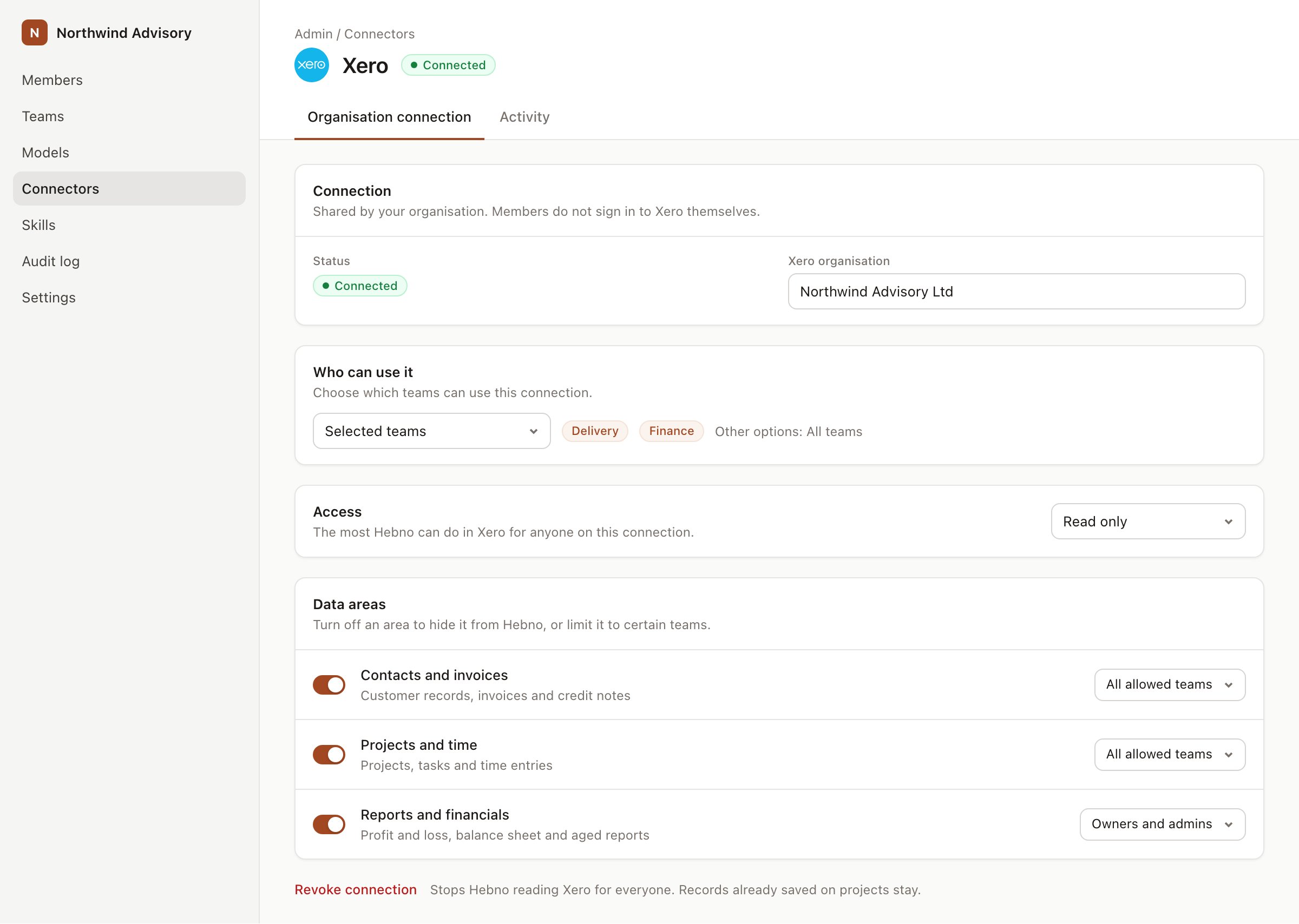
An organisation connection with team access and data areas. Financial figures default to owners and admins.
What Hebno reads
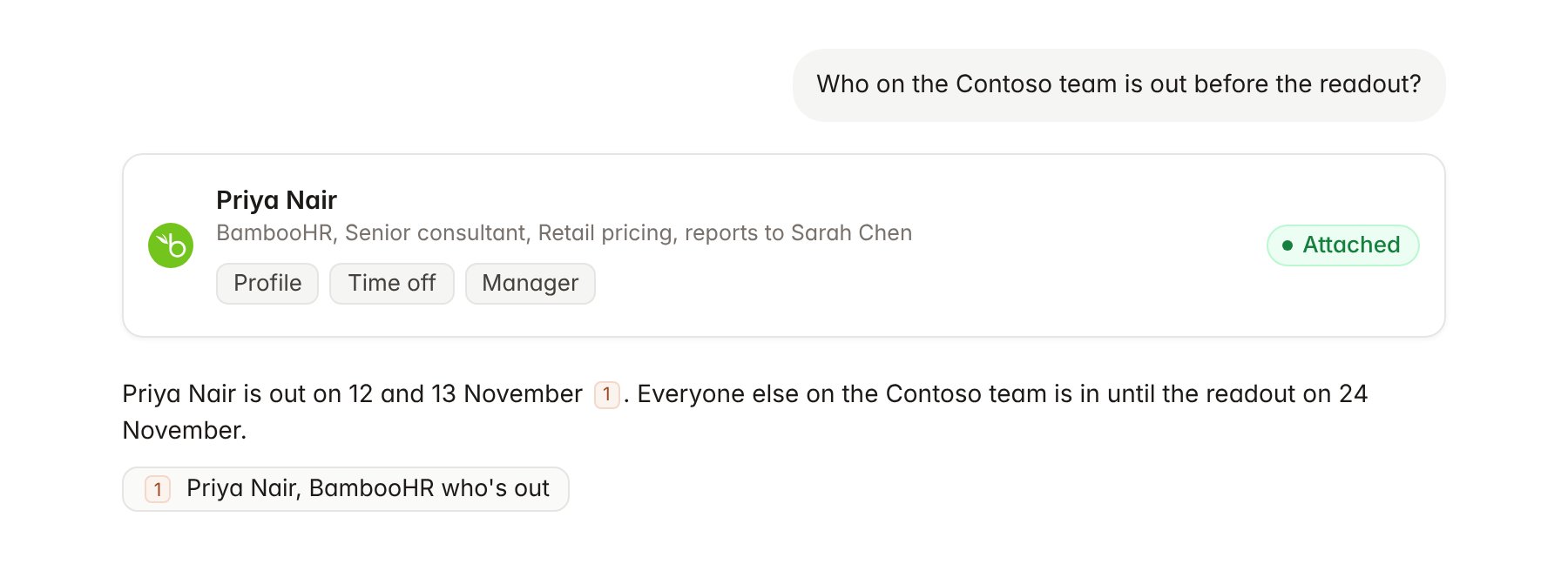
A BambooHR employee profile attached to a chat.
Hebno reads only
Hebno does not write to BambooHR. It does not create or approve time off requests, edit employee records, or change departments or managers. To book a consultant once you know they are free, use a resourcing integration such as Float.Link a project to its team
Linking marks which BambooHR employees work on a project, so you can ask “who on the team is away?” without naming everyone.- Open the project and select Brain.
- Under Linked records, select Link record, then BambooHR.
- Search by name or department, and select each employee. You can link a whole department instead.
Use BambooHR in chat
-
Attach: open the + menu, choose Sources → BambooHR, and pick an employee, a department or a who’s out period. Or type
/and choose BambooHR. -
Ask: name the person, team or period in your request. For example:
Who in the pricing team is out between 16 and 20 November?
List the Contoso project team with job titles and managers for the steering committee pack.
Which analysts joined the retail practice since September?
- Research runs show a Checking BambooHR step, with a chip for each employee and who’s out period it read.
- Agents can read BambooHR on a schedule, for example a Monday list of who is out on each active project this week.