

At a glance
Before you start
You need:- An owner or admin role in Hebno.
- A Stripe user with the Administrator or Developer role on the Stripe account, to create the key.
- A restricted API key for Hebno. In the Stripe Dashboard, open Developers → API keys, select Create restricted key, name it Hebno and set the permissions below. Live keys start with
rk_live_, test mode keys withrk_test_.
Permissions
Set each resource on the restricted key to the level shown. Leave every other resource at None.Connect Stripe
1
Allow the integration
Open Admin → Connectors → Catalogue, find Stripe under Finance, and set it to Allow.
2
Connect the organisation
Select Connect, paste the restricted API key and select Test connection. Hebno checks the key, shows the Stripe account name and lists the resources the key can read and write.
3
Choose teams and data areas
Under Who can use it, choose All teams or pick teams. Under Data areas, choose what members can see. See Data areas.
4
Set access
Access is Read only by default. Choose Read and write to let members propose draft invoices.
Data areas
Data areas control what members of the allowed teams can see through the organisation connection. They apply on top of the permissions on the restricted key.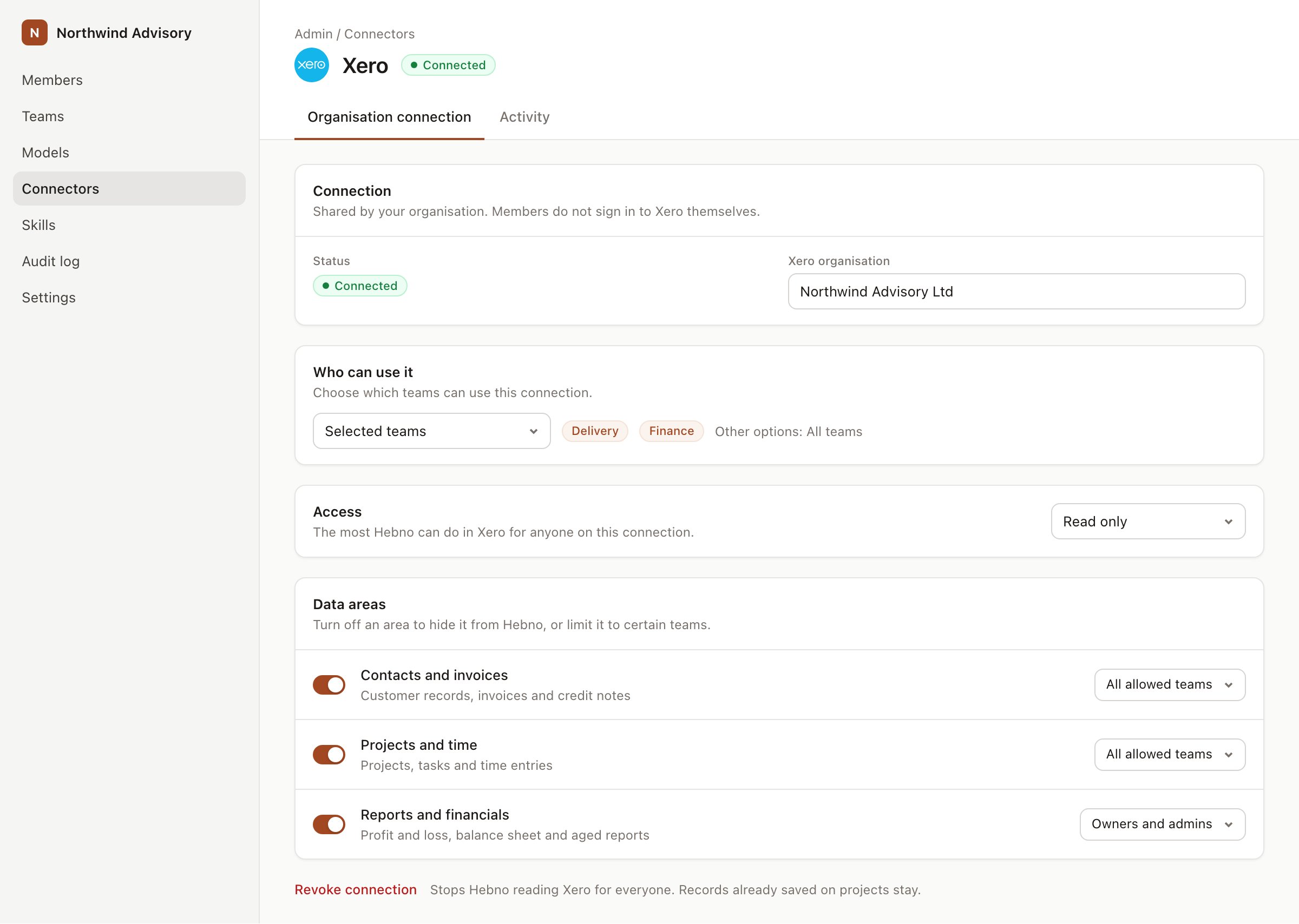
An organisation connection with team access and data areas. Financial figures default to owners and admins.
What Hebno reads
Reads are live. Hebno queries Stripe when a request needs it, so amounts match the Stripe Dashboard. Only what a reply used is stored with the conversation as its sources.
What Hebno writes
Every write appears first as a confirmation card. You can change any field before you select Confirm. Hebno writes drafts only.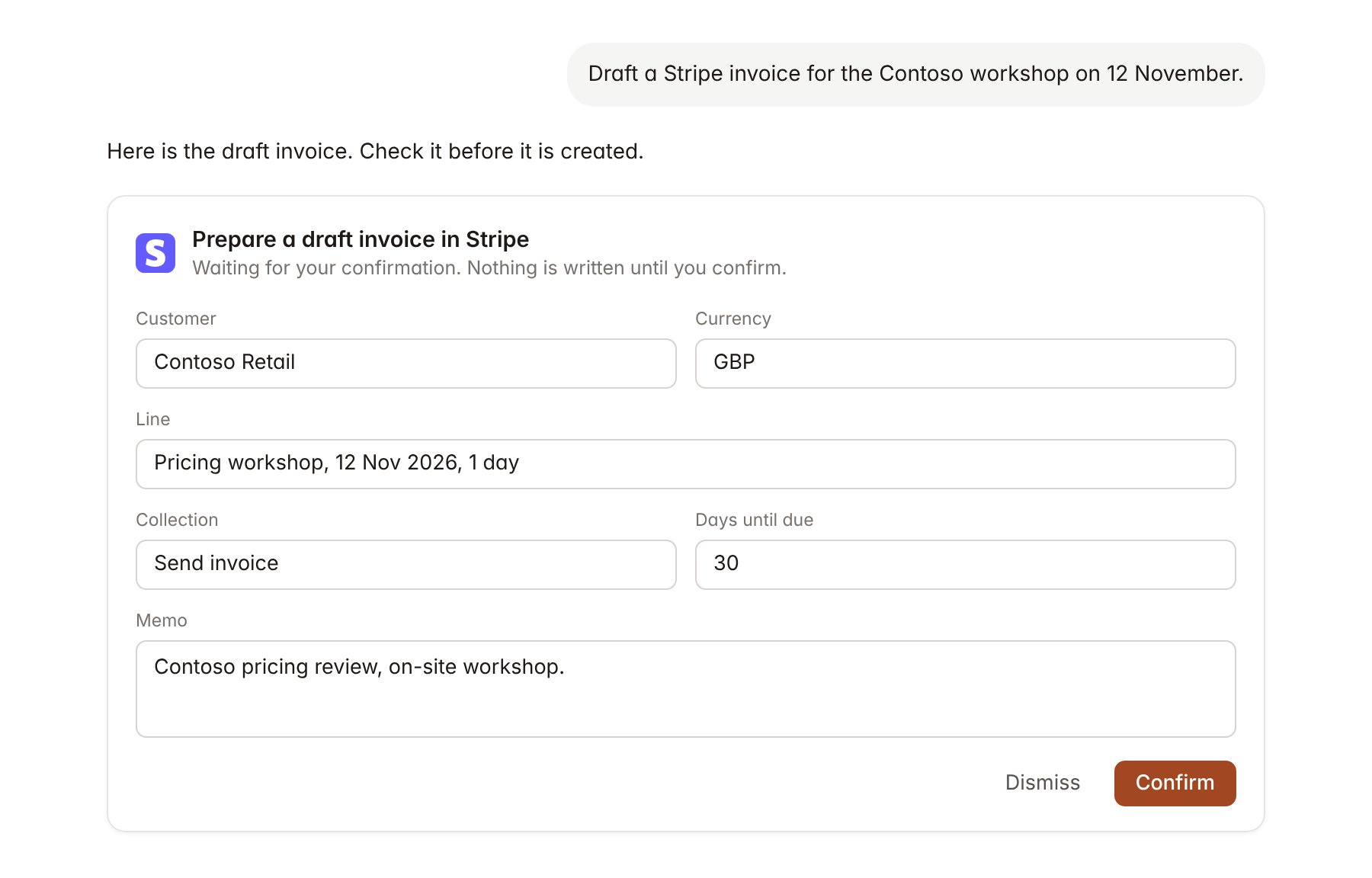
A Stripe change pending confirmation. Nothing is written until you confirm.
auto_advance set to false, so Stripe does not finalise it automatically. The invoice is in Draft until a person reviews, finalises and sends it in the Stripe Dashboard. Hebno never finalises, sends, pays or voids an invoice, creates a charge or payment intent, issues a refund or credit note, changes a subscription, or starts a payout.
The invoice is created through the organisation connection, with your name in the invoice metadata and the write recorded against you in Admin → Logs → Integrations.
Link a project to Stripe
Linking marks which Stripe customers belong to a project, so you can ask “has Contoso paid?” without naming the customer.- Open the project and select Brain.
- Under Linked records, select Link record, then Stripe.
- Search by customer name, email or customer ID (
cus_) and select the customer. Repeat for each customer the engagement bills.
Use Stripe in chat
-
Attach: open the + menu, choose Sources → Stripe, and pick a customer, an invoice, a subscription or a payout. Or type
/and choose Stripe. -
Ask: name the client, invoice or period in your request. For example:
Has Contoso Retail paid every Stripe invoice this quarter, and are any past due?
List payouts from the last two weeks with their arrival dates.
Prepare a draft Stripe invoice for Contoso for the 12 November workshop.
- Research runs show a Checking Stripe step, with a chip for each record it read.
- Agents can read Stripe on a schedule, for example a Monday list of open and past due invoices. Writes an agent proposes appear in agent approvals for review.